
01
Analyse
Website & Landing Page Review
We review the pages receiving traffic, important CTAs, forms, content, mobile experience and the paths visitors can take before converting.
Conversion Tracking Services
Then use the data to understand what is working, what is being missed and where your campaigns can perform better.
BrandSiix builds conversion tracking systems using Google Analytics 4, Google Tag Manager and advertising-platform measurement to track meaningful website actions, from lead forms and calls to WhatsApp clicks, video engagement, downloads, bookings and other valuable customer interactions.

Clicks Are Not the Full Story
A form submission is important, but it is rarely the only signal that tells you whether your website and campaigns are working. Visitors often take several meaningful actions before they are ready to enquire, book or buy.
How Our Conversion Tracking Services Work
Good tracking starts with understanding what a visitor is expected to do. Before creating tags and triggers, we analyse the website or landing page, campaign objective, customer journey and the actions that actually indicate interest or conversion.
We review the pages receiving traffic, important CTAs, forms, content, mobile experience and the paths visitors can take before converting.
We understand what Google Ads, Meta, LinkedIn or another campaign is trying to achieve so the tracking supports the actual marketing objective.
We decide which actions should be tracked, how events should be named and which signals are useful for reporting, optimisation or both.
Tags, triggers, variables and event parameters are configured so meaningful website interactions can be measured consistently.
Relevant conversions are connected with advertising platforms so campaigns can receive the signals needed for measurement and optimisation.
We test events before relying on the data, checking that the right action fires at the right time and avoiding duplicate or misleading conversions.
Website & Conversion Event Tracking
Depending on the website and campaign objective, we can measure the actions that show how visitors engage before, during and after the final conversion, giving your marketing team a much clearer picture of the customer journey.
Track the actions where a visitor directly contacts, enquires, books or submits information to your business.
Not every lead uses a website form. We can measure important communication actions that take visitors into another channel.
Measure whether visitors are consuming important content, not simply whether the page loaded.
Track interactions that help explain which pages, messages and calls to action are moving visitors further through the journey.
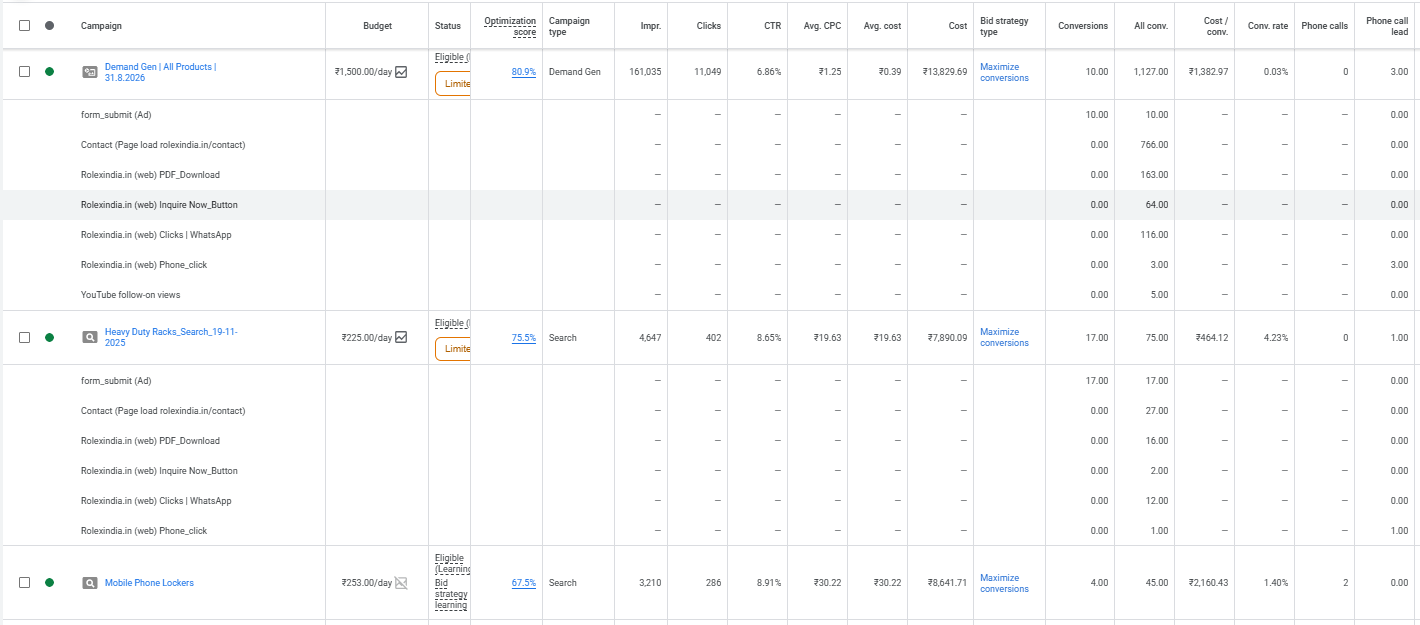
A real conversion setup can contain different actions such as calls, form submissions, contact-page interactions, PDF downloads, enquiry buttons and WhatsApp clicks, rather than treating every visitor journey as identical.
These are the actions closest to a meaningful business result and are often the strongest signals for campaign measurement.
These actions help explain visitor intent and behaviour, even when the final lead or purchase has not happened yet.
We distinguish between signals that should support campaign optimisation and signals that are better used for analysis, reporting and understanding user behaviour.
GA4 & Google Tag Manager Setup
Google Analytics 4 and Google Tag Manager work together to create a more useful measurement setup. GTM helps us capture meaningful website interactions, while GA4 helps organise, analyse and compare those signals across the customer journey.
We first identify the interactions that indicate engagement, intent or conversion.
The website action comes first. The tracking should follow the journey.
GTM becomes the measurement layer where we configure how important interactions should be detected and passed to the appropriate analytics or advertising platform.
GA4 helps organise the events into a broader view of acquisition, engagement and conversion so we can understand how visitors arrive and what they do afterwards.
Clear naming and useful parameters make reporting easier to understand and help reduce confusion when the same website contains several forms, CTAs, downloads or landing pages.
Avoid unnecessary or duplicate events that make reporting difficult.
Know which page, CTA or interaction generated the event.
Build reports around meaningful actions instead of raw page views.
Prepare relevant conversion signals for advertising platforms.
Google Ads Conversion Tracking
If every action is treated as the same conversion, campaign data can become difficult to interpret. We structure Google Ads conversion tracking around the actions that matter to the business and the purpose each signal should serve.
Lead, call, WhatsApp click, purchase, booking or another meaningful interaction.
The correct Google Ads conversion action is triggered through the measurement setup.
Decide whether the signal should influence optimisation or primarily support analysis.
Campaigns can be evaluated around meaningful business outcomes instead of clicks alone.
Conversion Architecture
Instead of sending every interaction into one generic conversion, we can configure separate Google Ads conversion actions so reporting provides a clearer view of what visitors actually did.
Used for the business outcomes a campaign is intended to optimise toward when that conversion goal is selected.
Useful actions can still be measured without automatically giving every event the same optimisation role.
The correct setup depends on the campaign objective. We decide which actions should influence optimisation and which are better kept as additional insight.
Enhanced Conversions
Where appropriate and implemented with the required privacy and consent considerations, Enhanced Conversions can supplement standard conversion measurement using first-party customer information collected during the conversion process.
Uses customer-provided information such as an email address or phone number when available.
Data is securely hashed before being sent for matching.
Supplements existing conversion measurement rather than replacing the underlying conversion event.
For businesses with a longer sales cycle, measurement can also be designed around CRM and offline outcomes so marketing analysis can move closer to lead quality and revenue, not just lead volume.
Conversion Tracking Implementation
Tracking should be tested before campaign decisions are made from it. We implement the measurement setup, validate the important events and check that conversions behave correctly across the customer journey.
Check current GA4, GTM, pixels, conversion actions and website behaviour.
Map the events, conversions and parameters that need to be captured.
Build tags, triggers, variables and platform conversion tracking.
Confirm the correct event fires only when the intended action occurs.
Check that GA4 and advertising platforms are receiving the expected data.
Watch the live setup for unexpected gaps, duplicate events or tracking issues.
Whether you are generating leads, selling online or running multi-platform campaigns, accurate tracking helps connect media activity with what visitors actually do on the website.
Conversion Tracking FAQ
From Google Tag Manager and GA4 event tracking to advertising conversions and Enhanced Conversions, here are some of the questions businesses commonly have before improving their measurement setup.
Let’s Build Something That Performs
Book a Call
Start the Conversation
